


The fastest way to get real value from a conference is to prepare a short list of people worth meeting, spend most of your time in small sessions and one-on-ones rather than big crowds, use a few evidence-backed conversation moves, and follow up within 48 hours with help from Social Media Marketing | Blindspot. The model is simple: shortlist, schedule, engage, follow up. Below you will find step-by-step tips, quick scripts and templates for each stage.
TL;DR:
- Pre-select 10 to 15 key people and reach out with a personalized message at least a few days before the conference to set up specific meetings.
- Focus on small sessions, roundtables, and hallway chats rather than large keynote speeches for meaningful conversations.
- Use tailored follow-up questions that reference details from the conversation, and send personalized messages within 48 hours to maximize response rates.
- Digital contact exchange through QR codes or NFC-enabled cards leads to better response rates and easier updates compared to physical business cards.
- Keep initial networking efforts focused and manageable; a 45-minute targeted outreach with breaks is more effective than trying to meet everyone.
Table of Contents
- 1. Top tips to use before, during and after the event
- 2. How to prepare before the conference: a quick checklist
- 3. Conversation skills that actually work
- 4. On-the-day tactics: where to find the best conversations
- 5. Digital contact exchange and the modern follow-up workflow
- 6. Follow-up that converts: timing, templates and tracking
- 7. A short perspective for introverts
- A simpler way to handle contact details on the day
- FAQ
- Sources
1. Top tips to use before, during and after the event
Good networking is a sequence, not a personality trait. These are the moves that make the biggest difference, in order.
- Build a shortlist before you arrive. Scan the speaker and attendee list, pick 10 to 15 people relevant to your work, and set a specific goal such as “have three real conversations” rather than “network more.”
- Send a short outreach message. A simple LinkedIn note works: “I saw you’re speaking on [topic] at [event], would you have 15 minutes for a coffee?” Pre-scheduling a handful of these turns a chaotic day into a manageable one.
- Use a short script to open conversations. At a talk: “That point about [specific detail] stood out, what’s driven that shift for you?” At an exhibitor booth: “What problem are people usually trying to solve when they stop at your stand?”
- Listen, then ask a follow-up tied to what they just said. This single habit does more for likability than any clever opening line.
- Pace your social energy. Plan short windows of high engagement followed by breaks, rather than trying to be “on” for an entire day.
- Exchange details through more than one channel. Hand over a physical card where it is expected, but also share a digital link or QR code, and send a LinkedIn connection request the same evening.
- Avoid pitching. Offer something useful instead, a resource, an introduction, or a piece of information relevant to what they just told you.
A few do’s and don’ts worth keeping in mind:
- Do ask open questions that invite more than a one-word answer.
- Do write down one detail from each conversation straight after it ends.
- Don’t try to work the whole room; a handful of good conversations beats fifty shallow ones.
- Don’t lead with your pitch; lead with a question about their work.
Pro Tip: Carry a tiny notebook or use your phone’s notes app to jot one memorable detail per person as soon as the conversation ends, you will forget most of it within an hour otherwise.
Preparation is consistently rated as the habit with the biggest payoff. According to ConferenceGrid’s conference networking research, shortlisting speakers and attendees and reaching out before the event is an impactful networking habit, more so than many techniques used on the day itself.

2. How to prepare before the conference: a quick checklist
A focused 60 to 120 minute prep session, done a few days before the event, sets up everything else.
- Scan the speaker and attendee list and note one sentence per person on what you would actually want to ask them.
- Narrow the full list down to 10 to 15 targets, then mark 3 to 5 as must-meet priorities.
- Check the conference app or LinkedIn for anyone on your shortlist and send a short message: “Would love to grab 15 minutes at [event] if you’re free, happy to work around your schedule.”
- Write a 30-second intro about your current role and one specific project you’re working on, practise it out loud once so it doesn’t come out stiff.
- Set a measurable goal for the day, such as “three scheduled one-on-ones and two unplanned hallway conversations” rather than a vague intention to “network more.”
This small amount of preparation does more than any technique you deploy on the day. ConferenceGrid’s guidance backs this up directly: attendees who shortlist people and pre-schedule meetings report far better outcomes than those who show up and improvise.
3. Conversation skills that actually work
The quality of a conversation comes down to how well you listen, not how smoothly you talk. Research on conversational dynamics found that follow-up questions tied directly to what someone just said increase likability and the sense of connection far more than generic openers or rehearsed small talk, according to research on conversational dynamics.
Three follow-up moves worth practising:
- Echo a specific word or phrase back: “You said the rollout took longer than expected, what caused the delay?”
- Ask for the story behind the fact: “How did you end up working on that?”
- Ask what’s next: “What are you hoping happens with that in the next six months?”
One useful structure is the HEAR technique: hedge your own certainty, emphasise points of agreement, acknowledge the other person’s perspective, then reframe toward common ground. For example: “That’s a fair point, and I’d add that the timing piece matters just as much as the budget piece.”
A quality follow-up beats a quantity of surface-level chats. ConferenceGrid notes that follow-ups referencing a specific detail from the original conversation noticeably improve response rates, and the practical window for sending them is within 48 hours.
4. On-the-day tactics: where to find the best conversations
Big keynotes are the worst place to network. Everyone is facing the stage, not each other. Workshops, roundtables, poster sessions and hallway chats are where real exchanges happen, because the format already assumes people will talk.
- After a session, approach the speaker with a specific line: “Your point about [X] stood out, can I ask how you’d apply that to [related situation]?”
- At a coffee station or exhibitor booth, skip the small talk about the weather and ask what people usually come to the booth hoping to solve.
- Treat poster sessions and roundtables as the highest-value real estate of the day, smaller groups mean every comment is heard.
- If you spot someone from your shortlist standing alone, that’s your moment, isolated attendees are usually glad for company.
For introverts, energy management matters as much as technique. Harvard Health’s guidance for introverts recommends starting small, scheduling structured engagements rather than open-ended mingling, and building in breaks to avoid burning out halfway through the day.
Pro Tip: Plan your exits in advance, decide how long you’ll stay at a social event before you walk in, and give yourself permission to leave once you’ve had two or three solid conversations.
5. Digital contact exchange and the modern follow-up workflow
Handing over a paper card still matters in some rooms, but it is the digital follow-up that determines whether a contact turns into anything. Giving a card in the moment and connecting digitally that same evening, while the conversation is still fresh in both people’s minds, consistently produces better reply rates than relying on a business card that sits in someone’s pocket for a week, as ConferenceGrid’s research on contact exchange points out.
- A digital business card that updates live means your contact never has an outdated phone number or old job title on file.
- Sharing a profile through a QR code or direct link skips the fumbling for paper cards and works whether or not the other person has an app installed.
- The quick workflow: exchange a card or QR code, jot a one-line note about what you discussed, send a LinkedIn connection that evening, and log one concrete follow-up action.
Tools built around this approach, such as a digital business card platform, remove the friction of printed cards running out mid-conference and let you keep every contact’s details current without reprinting anything.
6. Follow-up that converts: timing, templates and tracking
The window that matters most is the first 48 hours. After that, both the memory of the conversation and the sense of momentum start to fade, and ConferenceGrid’s follow-up research backs sending a personalised note inside that window to maximise replies.
Three templates worth keeping on hand:
- Connection request: “Great chatting at [event] about [topic], would love to stay in touch.”
- Thank you plus next step: “Thanks for the chat yesterday, the point about [detail] stuck with me. Would you be open to a 20-minute call next week to dig into it further?”
- Resource share: “This made me think of our conversation about [topic], thought you might find it useful: [link].”
For tracking, a simple spreadsheet or notes file with name, one detail, and a follow-up date works fine, you don’t need a full CRM for conference contacts. If someone doesn’t reply, one polite nudge after a week is reasonable; after that, let it go.
7. A short perspective for introverts
Most networking advice assumes you want to meet everyone in the room. You don’t need to. A handful of focused, well-prepared conversations will outperform a day of exhausting small talk every time, and treating each event as practice rather than a performance takes the pressure off. The 45-minute rule helps here: commit to 45 focused minutes of networking, then give yourself a genuine break. It works because it turns an overwhelming day into a series of small, manageable efforts.
— Chris
A simpler way to handle contact details on the day
We built EcoCard because printed cards run out, go out of date, and get thrown away, which makes them a poor match for how conferences actually work. With a digital card, your details update live across every card you’ve shared, so a changed job title or phone number is fixed once and reflected everywhere, and teams get centrally managed branding so every staff member’s card looks consistent without anyone chasing updates.
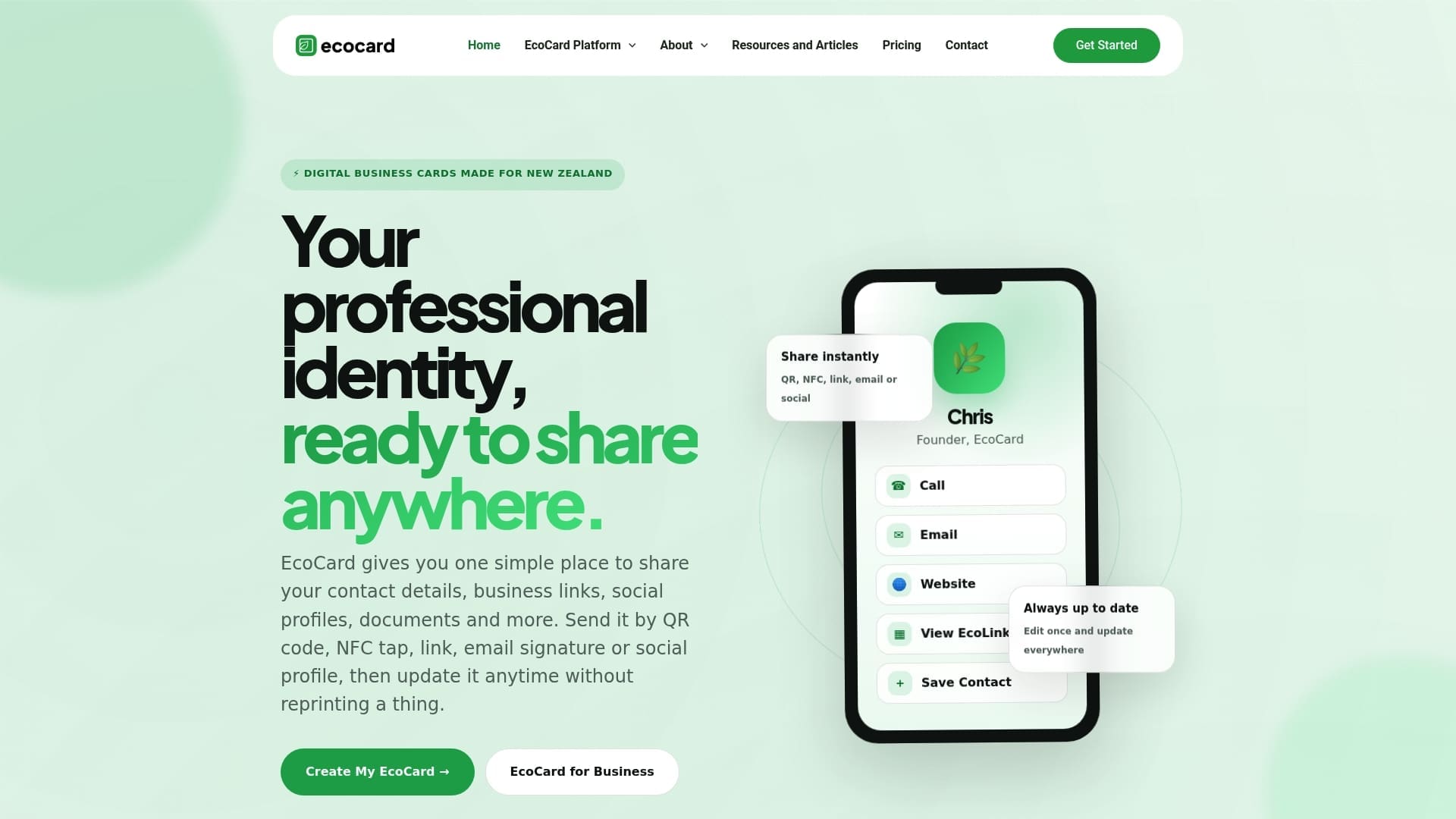
A typical conference workflow looks like this: tap your phone against someone else’s NFC-enabled device, or let them scan your QR code, they land on your profile with your current role and links already in hand, no app download required. If you want to see how this fits your own setup, our pricing plans start with a low-friction Individual option for solo professionals and scale up for teams that need shared branding and admin control.
FAQ
What is the best way to network at a conference?
The most effective approach is to prepare a shortlist of people to meet before you arrive, prioritise small sessions and one-on-ones over large keynotes, and follow up within 48 hours. ConferenceGrid’s research identifies preparation and timely follow-up as the two habits with the biggest impact on outcomes.
What are the 5 P’s of effective networking?
Definitions of the “5 P’s” vary across different networking guides, so there’s no single agreed version. A practical approach that covers the same ground is to prepare, prioritise a shortlist, pace your energy, pose good follow-up questions, and promptly follow up afterwards.
What are the most important networking skills?
The core skills are preparation, asking specific follow-up questions tied to what the other person just said, active listening, pacing your energy across the day, and following up promptly. Research on conversational dynamics shows that tailored follow-up questions build more rapport than rehearsed small talk.
What are the three C’s of networking?
Different sources describe the “three C’s” differently, but a version that holds up in practice is clarity about your goal for the conversation, consistency in following up afterwards, and curiosity about the other person’s work. Harvard Career Services frames this kind of approach as treating networking as a learning conversation rather than a performance.
How soon should I follow up after meeting someone at a conference?
Within 48 hours is the practical window, while the conversation is still fresh for both of you. ConferenceGrid’s guidance notes that follow-ups referencing a specific detail from the original conversation get noticeably better response rates than generic messages sent later.
Sources
- Conference networking tips: 10 strategies that actually work | ConferenceGrid
- An introvert’s guide to socialising | Harvard Health
This article was produced with AI assistance and reviewed for accuracy. It is provided for general information only and is not professional advice.

